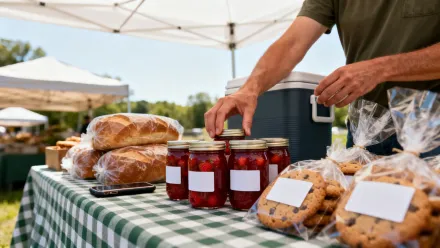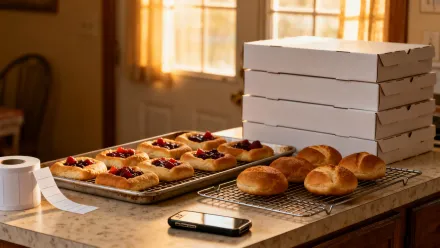

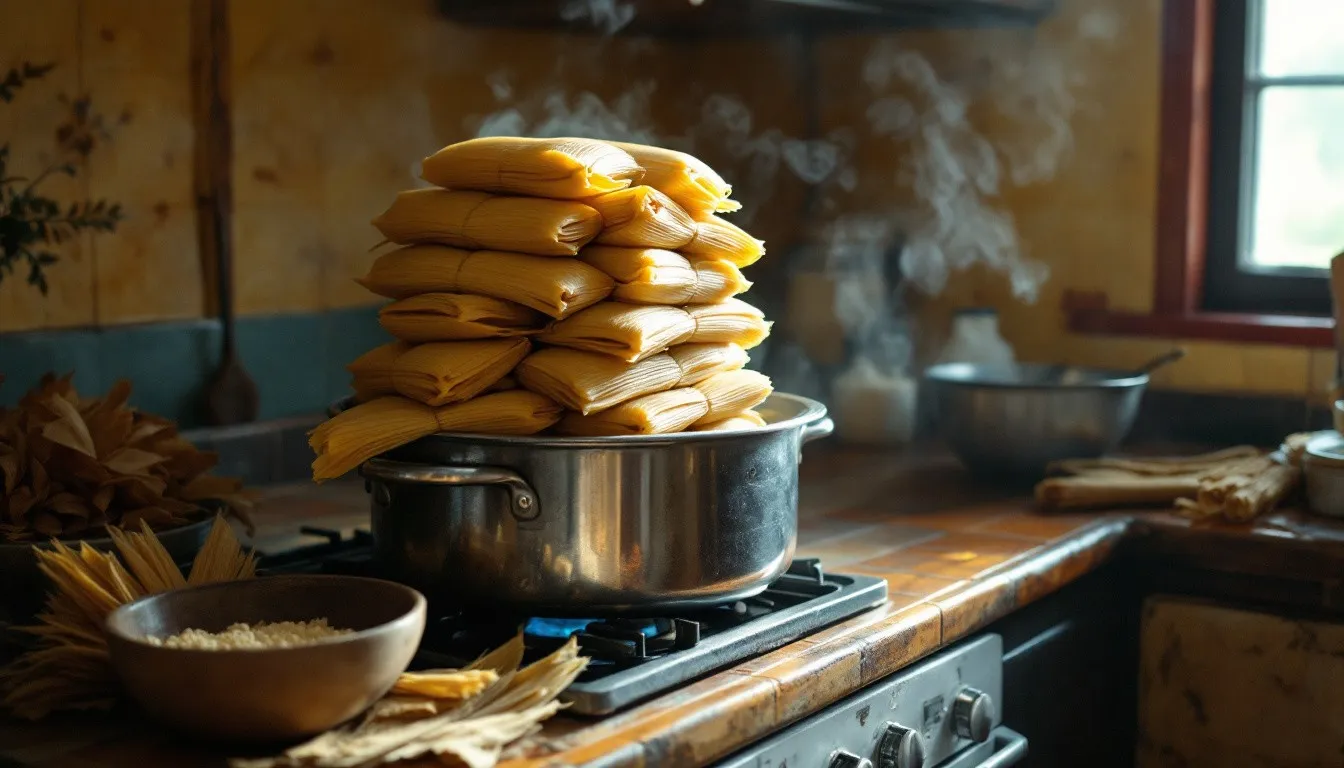
Starting January 1, 2027, Colorado's cottage food law lets you sell food that needs refrigeration from your home kitchen for the first time. Tamales, burritos and tortas are named in the statute. You get one type of refrigerated food with up to five variations, plus the shelf-stable foods the law already covered. Meat has to be federally inspected or exempt. You have to register with the state every year and take a food safety course, and you sell directly to informed end consumers. The cap goes from $10,000 to $150,000 a year in gross revenue, across everything you sell, adjusted for inflation every year.
That last part is where I got it wrong. When the Tamale Act (House Bill 26-1033) passed, I wrote our Spanish-language post and called the cap $150,000 in net revenue. Most of the coverage says net. So does the bill summary on the legislature's own page. Then I sat down with the signed act. The word "net" is struck out and "GROSS" is written in. That's not a footnote. It decides how much tamale business fits inside the law.
I started on a street food stall in college, not in a home kitchen. Back then, nobody warned me about the paperwork. They should have warned me about the day the business outgrew its permit. That's what this law is really about, so here it is from the operator's side.
What does Colorado's cottage food law allow starting January 1, 2027?
This comes from the signed text of HB26-1033, which amends C.R.S. 25-4-1614. The cottage food changes take effect January 1, 2027. The rest of the act, the funding, took effect when the governor signed it on June 4, 2026.
Rule | Through December 31, 2026 | From January 1, 2027 |
|---|---|---|
Foods allowed | Shelf-stable only: baked goods, jams, honey, spices, candies, tortillas and similar | The same, plus one type of food that needs time and temperature control, with up to five variations |
Meat | No | Yes, if it is federally inspected and bears the mark, or meets a federal or state exemption |
Revenue cap | $10,000 net per year, per product | $150,000 gross per year, across all food sold under the law, adjusted annually for Denver-area inflation |
Registration | No state registration | Register with the Colorado Department of Public Health and Environment (CDPHE) every year, before selling anything |
Training | Food safety course | Food safety course, plus time-and-temperature training and proof of completion if you sell refrigerated food |
Label address | The address where the food was made | The county where it was made, plus your registration number and a CDPHE website for consumers |
Is the $150,000 cap gross or net?
Gross. Colorado bills show changes in place: capital letters are new law, struck words are removed. In the signed act, section 25-4-1614(2)(e) reads "net GROSS revenues of ten ONE HUNDRED FIFTY thousand dollars." The "net" and the "ten" are struck. "GROSS" and "ONE HUNDRED FIFTY" are new. The same change runs through the agriculture definitions in section 6 of the act.
The old law also measured the cap "from the sale of each eligible food product." That phrase is struck too. The new cap counts revenue from "food permitted under this section," which is all of it. The law also bars you from setting up multiple entities or contracts to get around the cap.
Here's why that matters. Under the old law you could sell bread, jam and granola and net $10,000 on each one. Under the new law, your bread, your jam and your tamales all go into one bucket. And the bucket counts every dollar a customer hands you, before you pay for masa, pork, husks, gas or packaging.
How many tamales is $150,000 gross?
Some rough math, with made-up prices. Use yours.
If you charge | The cap is about | Per week (52 weeks) |
|---|---|---|
$20 a dozen | 7,500 dozen a year | 144 dozen |
$24 a dozen | 6,250 dozen a year | 120 dozen |
$30 a dozen | 5,000 dozen a year | 96 dozen |
For most people selling out of one kitchen, that's a lot of room. Where it gets tight is December. If a third of your year comes in the five weeks before Christmas, you can be closer to the line than your weekly average suggests, and the cap is per calendar year. It resets January 1, not on your registration date.
If you read our Spanish post earlier, this is the correction: the cap is easier to measure than I said, because you don't need costs to know your gross. But it's also a harder cap, because your expenses don't stretch it.
What can't you sell under the new law?
More than one type of refrigerated food at a time. Pork, chicken, rajas, green and sweet tamales are five variations of one type. Tamales plus birria is two types. You can switch products, but never more than five variations of one type at once, and you have to give CDPHE or your local health agency the list if they ask.
Food you cooled and reheated. The statute says the final product can't be cooled and reheated before it's sold.
Food touched with bare hands. No bare-hand contact with ready-to-eat food.
Excluded categories: raw milk, low-acid canned foods, fermented or acidified foods that need refrigeration, alcohol, anything with cannabinoids, and foods preserved by smoking, reduced-oxygen processing or curing. Smoking for flavor is fine.
Uninspected meat. Your pork has to carry the federal inspection mark or meet an exemption, so receipts from the butcher matter.
Whole eggs are their own line: up to 250 dozen a month, under the state egg rules.
What are the transport rules for refrigerated cottage food?
If refrigerated food leaves your kitchen before it reaches the customer, you have to keep it at a safe holding temperature, move it once, and keep it in transit for no more than two hours. The cooking, cooling and holding temperatures come from CDPHE rules adopted under section 25-4-1604.
That one rule shapes the business more than the cap does. Kitchen to farmers market: fine. (If that's your plan, here's how to take cards at a farmers market.) Kitchen to your cousin's house, then to the market: that's two trips. A four-stop morning route to job sites gets hard to defend once the first stop is behind you.
What has to be on a Colorado cottage food label in 2027?
HB26-1033 changes the label so it must include at least:
Your name and your CDPHE registration number
The county where the food was prepared, instead of your home address
Your current phone number or email address
A complete list of ingredients
A CDPHE website where consumers can report a foodborne illness, check that your registration is active, and report problems with it
The label rules the act didn't touch still apply, so check the full list with CDPHE before you print a run. The county-instead-of-address change gets little attention, but it's one of the best things in the bill. Selling legally used to mean printing your home address on every package that went out the door.
How do you register, and what training do you need?
Every cottage food producer, not only the tamale makers, has to register with CDPHE every year before selling, and list the types of food they plan to sell. CDPHE issues the number that goes on your label and has to publish the registry, updated monthly, on its website.
Everyone needs a food safety course, from Colorado State University Extension or a comparable one. If you sell refrigerated food, the course has to cover time and temperature control, and you need to keep proof you finished it. CSU Extension lists revised statewide classes on January 4, January 18, February 1, February 15 and March 1, 2027.
What happens if you get it wrong?
If an inspection finds misbranded food or food that could make people sick, CDPHE or the local agency can fine you up to $100 for the violation and recover up to $1,000 in investigation costs. Three misbranding or temperature-rule findings within 12 months and you lose the right to sell refrigerated food under the law.
The honest version
This is a good law. It brings a business that already exists in thousands of Colorado kitchens into the open, and it doesn't make anyone rent a commercial kitchen just to start.
But it isn't a restaurant license. One product, one trip, two hours, direct to the customer. If your plan is a menu, catering or wholesale, the Tamale Act is the first step, not where you end up. And the details that decide your day-to-day work are CDPHE's to write: holding temperatures, the registration process, any fee. I couldn't confirm those on CDPHE's site as of today. Check before January 1.
Where tracking it by hand breaks down
Gross sounds simple until you try to add it up. Cash at the market. Venmo from the neighbors. A card reader at the church sale. Pre-orders over text. Every one of those counts toward the $150,000, and none of them lands in the same place. The producers I'd worry about aren't the ones near the cap. They're the ones who can't tell you within $5,000 where they are in November.
That's what we built Avocado for. Take cards with Tap to Pay on iPhone, no card reader needed. Ring up cash in the same app, and take online pre-orders for pickup. Your year-to-date gross becomes a number you look up, not a shoebox you dig through in April. No monthly software fee. If you outgrow the home kitchen, the same account goes with you to a truck or a storefront. If you're not there yet, a notebook and every receipt will do.
Avocado is a POS built for independent restaurants and food trucks. We're operators first, and we'd rather tell you the honest version than the version that closes faster.
This is operator experience, not legal advice. It's based on the signed text of Colorado House Bill 26-1033 (C.R.S. 25-4-1614 as amended, effective January 1, 2027) and Colorado State University Extension's cottage food training schedule, as of November 18, 2026. CDPHE's implementing rules may add detail. Confirm current requirements with CDPHE and your county public health agency before you sell.