
Indiana now has two legal ways to sell food you make at home, and you can run under either one. The older home-based vendor law (IC 16-42-5.3) lets you sell shelf-stable food from your home kitchen with no sales cap and no permit, as long as you hold a food handler certificate and label everything. The newer homestead vendor law (IC 16-42-5.4, from House Enrolled Act 1424) took effect July 1, 2026. It adds meat and prepared foods like meal kits and deli items, up to $1.5 million in gross sales a year. In exchange, it limits where you can sell.
That last part is what most of the pages ranking for this still miss. Several of them describe the 2022 law as if it were the whole story. The Indiana Department of Health (IDOH) told local health departments in a May 26, 2026 memo that both laws stay in force side by side.
I came up through a street food stall, Bun Boiz, not a home kitchen. So this is the statute read from the operator's side of the table, not a lawyer's. The one thing I'd tell a friend in Indiana: pick your pathway by where you sell, not just by what you make.
What are the two Indiana cottage food pathways?
This table is built from the IDOH memo "Farm and Homestead Food Sales" (May 26, 2026) and the IDOH Home-Based Vendor Handbook.
Rule | Home-based vendor (HBV) | Homestead vendor |
|---|---|---|
Law | IC 16-42-5.3 (HEA 1149, 2022) | IC 16-42-5.4 (HEA 1424, in effect July 1, 2026) |
Where you make it | Your primary residence | Your "property": your primary residence or agricultural land you own or lease |
What you can sell | Non-TCS food only (food that doesn't need time or temperature control) | Meat products raised on your property, prepared foods including baked goods, candy, produce, natural sweeteners, fruit spreads |
Annual sales cap | None | $1.5 million gross from food and meat products |
Where you can sell | In person at markets and events, roadside stand, online, delivery, mail or third-party carrier | From your property, at a farmers market, online, delivery |
Food handler certificate | Always required (ANSI-accredited issuer) | Required if you ship or deliver |
Who you sell to | The end consumer only, inside Indiana | The end consumer only, inside Indiana |
There's a third category, the small farm operator. It works like the homestead vendor but runs from land used mainly for crops or livestock, with the same $1.5 million cap. If you farm, read the memo's small farm section. If you bake in your kitchen, the two columns above are the ones that matter.
What can a home-based vendor sell in Indiana?
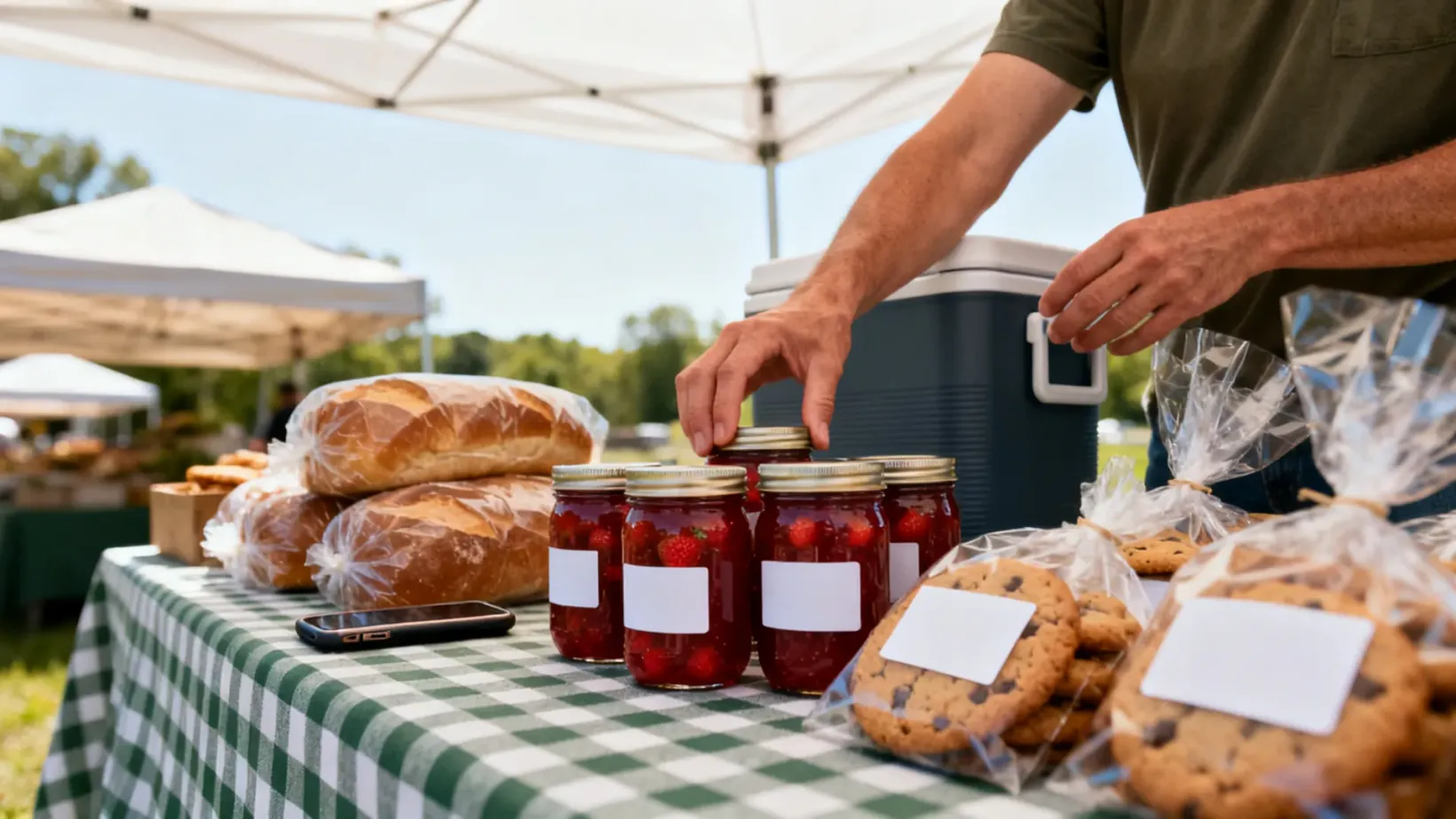
Anything that's safe on a shelf at room temperature. That means cookies, breads, most fruit pies, candy, fudge, granola, dried mixes, and high-sugar jams and jellies. The IDOH handbook runs product by product, and it's worth reading before you plan a menu, because the line isn't always obvious. Cheesecake is out. Kombucha is out because of its alcohol content. Some cold brew and fresh-pressed juice face extra rules.
The HBV label has to show, on every product:
Your name and address
The common name of the food
Ingredients, in descending order by weight
Net weight, volume or count
The date you made it
This statement in at least 10-point type: "This product is home produced and processed, and the production area has not been inspected by the State Department of Health. NOT FOR RESALE."
You also need a food handler certificate from an ANSI-accredited issuer. Purdue Extension offers courses, and your county health department can point you to others.
What changed for Indiana home food sellers on July 1, 2026?
HEA 1424 created the homestead vendor category. The big change is the food list. Under the homestead path you can sell:
Meat products from animals raised on your property, as long as they're slaughtered, processed and labeled under Indiana's meat and poultry law (IC 15-17-5)
Prepared foods, which IDOH describes as packaged meals, deli items like sandwiches and salads, ready-to-eat snack cups and meal kits, plus baked goods
Candy, natural sweeteners and fruit spreads
Produce. Domestic chicken eggs are the exception. They still need a permit through the Indiana State Egg Board.
The homestead label is different from the HBV label. It needs your name, your address, the ingredients by weight, a description of the product, a description of allergens it may have touched, and a statement in at least 10-point type saying it was made by a homestead vendor exempt from government licensing and inspection. Copy that statement word for word from IC 16-42-5.4 or your county health department before you print. Don't reuse your old HBV sticker.
IDOH also says local health departments can't be stricter than the statute. Farmers markets can, though. A market is privately run, and it can ban products the state allows.
Which Indiana cottage food pathway should you use?
Start with the question most guides skip: where are you going to sell?
Craft fairs, festivals, church sales, pop-ups at a brewery. The HBV rules list sales "at markets and events." The IDOH memo lists homestead sales at your property, a farmers market, online and delivery. Events aren't on that list. If your plan is a festival booth with homestead-only products like cheesecake or meal kits, ask your county health department before you pay the booth fee.
Shipping across Indiana. Both paths allow it inside the state. HBV allows mail and third-party carriers outright. The homestead path needs a food handler certificate, sealed packaging and refrigerated meat. Nobody can ship to a customer outside Indiana under either law.
You make anything refrigerated or anything with meat. That's the homestead path or nothing. HBV is non-TCS only.
You expect to be very big. HBV has no cap. Homestead stops at $1.5 million. Almost nobody hits that from a home kitchen, but it's a real difference.
Can you run both? The memo describes them as separate categories that both remain in force. Whether one person can sell some products as an HBV and others as a homestead vendor on the same day isn't spelled out in anything I could find. If that's your plan, get the answer from your county health department in writing.
Can you cut a pie or serve samples at the market?
Not under the homestead rules. This is the part that catches people who've worked a stall. IDOH says homestead food that needs packaging has to be packaged on your property before it goes to the market, and it can't be "manipulated" after that. Their list of manipulation includes serving, cutting, ladling, reheating, cooking, pouring and repackaging.
So no slicing a pie into pieces at the table, no ladling chili into cups, no warming anything up. The moment you start serving food on site, you're not a home vendor anymore. You're a retail food establishment, and that's a temporary event permit or a mobile food license, which is a different rulebook and a different fee. Anyone who has run a stall knows the rule: the paperwork changes the second food gets handled in front of the customer.
If you plan to go that direction, read what a food truck permit actually costs before you price the jump.
What the Indiana cottage food law doesn't cover
This is the honest part. The exemption settles licensing and inspection. It doesn't settle these:
Federal rules on meat and prepared foods. IDOH flags that many prepared foods containing meat, like casseroles, meat pies, lasagna and broths, may fall under USDA Food Safety and Inspection Service rules. The state exemption doesn't override federal law.
Produce over $25,000 a year. IDOH says homestead produce sales above that may fall under the federal produce safety rule and inspection.
Selling to stores, cafés or restaurants. Neither path allows it. Sell to anyone but the end consumer and IDOH can treat you as an unlicensed retail or wholesale food establishment.
Sales tax, zoning and insurance. Ask the Indiana Department of Revenue about your products, check your HOA and zoning before customers start pulling into your driveway, and talk to an insurance agent about product liability. Nobody inspects your kitchen, so the risk is yours.
Alcohol and pet food. HEA 1424 covers food for people only. Pet treats go to the Office of Indiana State Chemist and alcohol to the Alcohol and Tobacco Commission.
Where doing it by hand breaks down
Most home food businesses start with a notebook, a cash box and a payment app. That works at one market a week. It gets shaky when you're selling at the market, taking porch pickups and doing deliveries, and you need to know what sold where. Under the homestead path, that matters: the channel decides whether you need a certificate, and the product decides which label goes on it.
If you're starting at a market, read how to take cards at a farmers market with just your phone. You don't need hardware to begin.
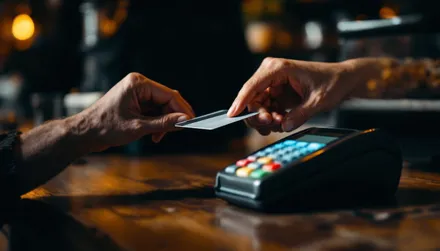
That's where Avocado fits, lightly. You can take cards with Tap to Pay on iPhone with no monthly software fee, take online pre-orders for pickup or delivery, and see every sale in one place instead of three apps. If you outgrow the home kitchen, the same account moves with you to a truck or a storefront.
Avocado is a POS built for independent restaurants and food trucks. We're operators first, and we'd rather tell you the honest version than the version that closes faster.
This is operator experience, not legal advice. Rules are from the Indiana Department of Health's May 26, 2026 memo on HEA 1424 (IC 16-42-5.4) and its Home-Based Vendor Handbook (IC 16-42-5.3), as of November 2026. Confirm current requirements with your county health department, your farmers market and the Indiana Department of Revenue before you start selling.